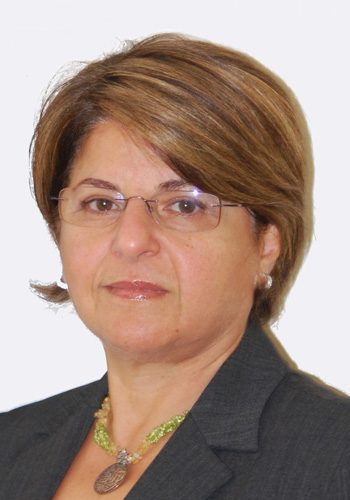
Dr. Muna Naash
John S Dunn Endowed ProfessorThe research interests of the joint labs of Drs. Naash and Al-Ubaidi involve primarily the study of the mechanisms of retinal degeneration in animal models of human blinding disorders. Knock-in mouse models for mutations that affect humans are generated and subjected to non-invasive functional and structural techniques to assess the rate of degeneration. Then, molecular and biochemical analyses are performed on retinal samples obtained from the mouse models. These mouse models are then used to develop nanoparticle-based gene therapy to ameliorate the disease phenotype. The animal models used in the labs are for retinitis pigmentosa and Usher syndrome. Another approach that has been recently introduced is the study, using metabolomics, of the metabolic changes that occur prior to and during the retinal degenerative process. A student working on any of these projects would attain hands-on experience in electroretinography, optical coherence tomography, fundus imaging, as well as molecular, biochemical, cell biological, and histologic techniques. Research in the Naash and Al-Ubaidi labs is funded by awards from the National Eye Institute and the Foundation Fighting Blindness.
Dr. Naash is an expert on genetic mutations associated with hereditary retinal disorders. She has achieved both national and international recognition for her work involving viral and non-viral ocular gene delivery.
Selected Publications
- Conley SM, Stuck MW, Watson JL, Zulliger R, Burentt JL and Naash MI (2019) Prph2 initiates outer segment morphogenesis but maturation requires Prph2/Rom1 oligomerization. Hum Mol Genet. 28(3):459-475, PMCID: PMC6337695.